
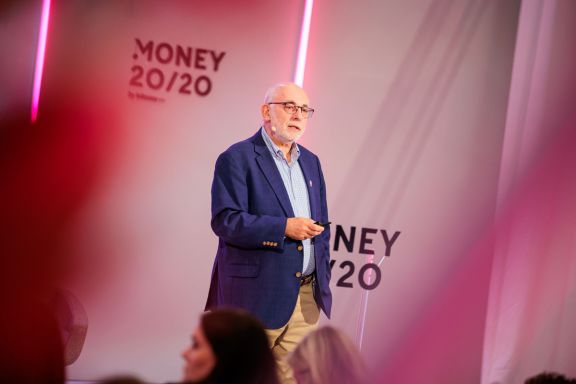
Money 20/20 Europe 2026: Identity, Intelligence and the New Infrastructure
I’ve been going to Money 20/20 Europe for years now and I have to say that this year’s European edition, held in Amsterdam from 2–4 June, was the best organised that I can remember.
Partly this is because it felt smaller, although I suspect it wasn’t. The layout seemed designed to encourage conversations rather than simply maximise footfall. There was room to think, room to meet people and, perhaps most importantly, room to bump into old friends.
What struck me most was not any single announcement or product launch, but the extent to which the industry has moved beyond experimentation. The discussion is no longer about whether AI, digital identity, stablecoins or digital assets might transform financial services. The discussion is now about implementation. The architecture is being built.
And architecture matters.
Because once infrastructure becomes embedded, it becomes difficult to dislodge. The decisions being made now about money, identity and intelligence will shape markets for decades.

Stablecoins Have Left the Laboratory
If there was one word that echoed through every corridor, panel discussion and coffee queue, it was “stablecoin”.
Not cryptocurrency. Not blockchain.
Stablecoin.
What’s interesting is not the volume of conversation but its maturity. The industry has largely moved on from asking whether stablecoins have a future. The question now is how they fit into the emerging financial infrastructure.
I spent some time discussing exactly this on the MoneyLab stage alongside Simon Taylor and Nilixa Devlukia. Simon and I have been exploring the history and future of stablecoins for some time, and Nilixa brought the welcome perspective of regulatory reality to the discussion.
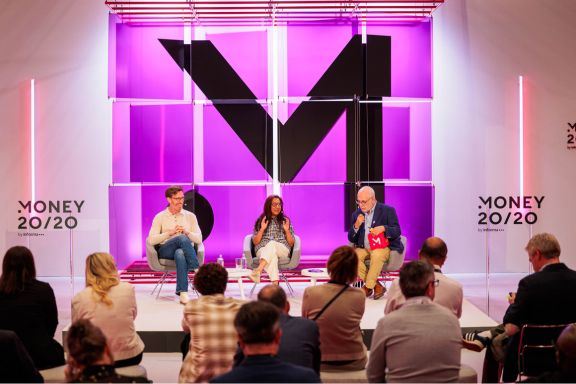
What was noticeable was that audiences are no longer interested in conference theatre. They want practical answers. How will settlement work? What happens to liquidity management? What are the implications for regulation and financial stability?
These are sensible questions because programmable, always-on money is no longer a thought experiment.
As I argued in The Currency Cold War, money is a technology before it is anything else. When the technology changes, institutions change with it.
For businesses outside financial services, the important point is not whether stablecoins replace existing payment systems. The important point is that they make possible new forms of commerce: instant settlement, automated treasury management and contractual execution linked directly to economic events.
In other words, new plumbing creates new business models.
Regulation Is Becoming a Strategic Asset
One of the conference themes was “Regulation in the Fast Lane”.
That title captures something important.
For years, many firms treated regulation as a brake on innovation. Increasingly, the opposite appears to be true.
The organisations moving fastest are often those that have invested most heavily in regulatory capability.
The UK’s Financial Conduct Authority was frequently cited as an example. Rather than standing on the sidelines, it is actively experimenting with AI use cases and working with international counterparts on future frameworks.
This matters because the regulatory burden is not getting lighter. Between the AI Act, MiCA, PSD3 and ever-evolving financial crime requirements, complexity is increasing rather than decreasing.
The firms that can navigate that complexity efficiently gain an advantage.
You cannot build first and ask permission later.
Or, more accurately, you can—but you may not enjoy the consequences.
AI Is Really About Trust
Predictably, AI was everywhere.
Less predictably, some of the discussions were actually useful.
I have been spending a good deal of time recently thinking about agentic commerce: what happens when software agents begin acting on our behalf in financial markets and commercial environments. The interesting question is no longer whether AI can make decisions. It clearly can.
The interesting question is who is accountable for those decisions.
In recent work on customer bots and non-human customers, I’ve argued that retail financial services will increasingly be conducted not between banks and people, but between banks and the intelligent agents acting for those people.
That shift was visible throughout the conference.
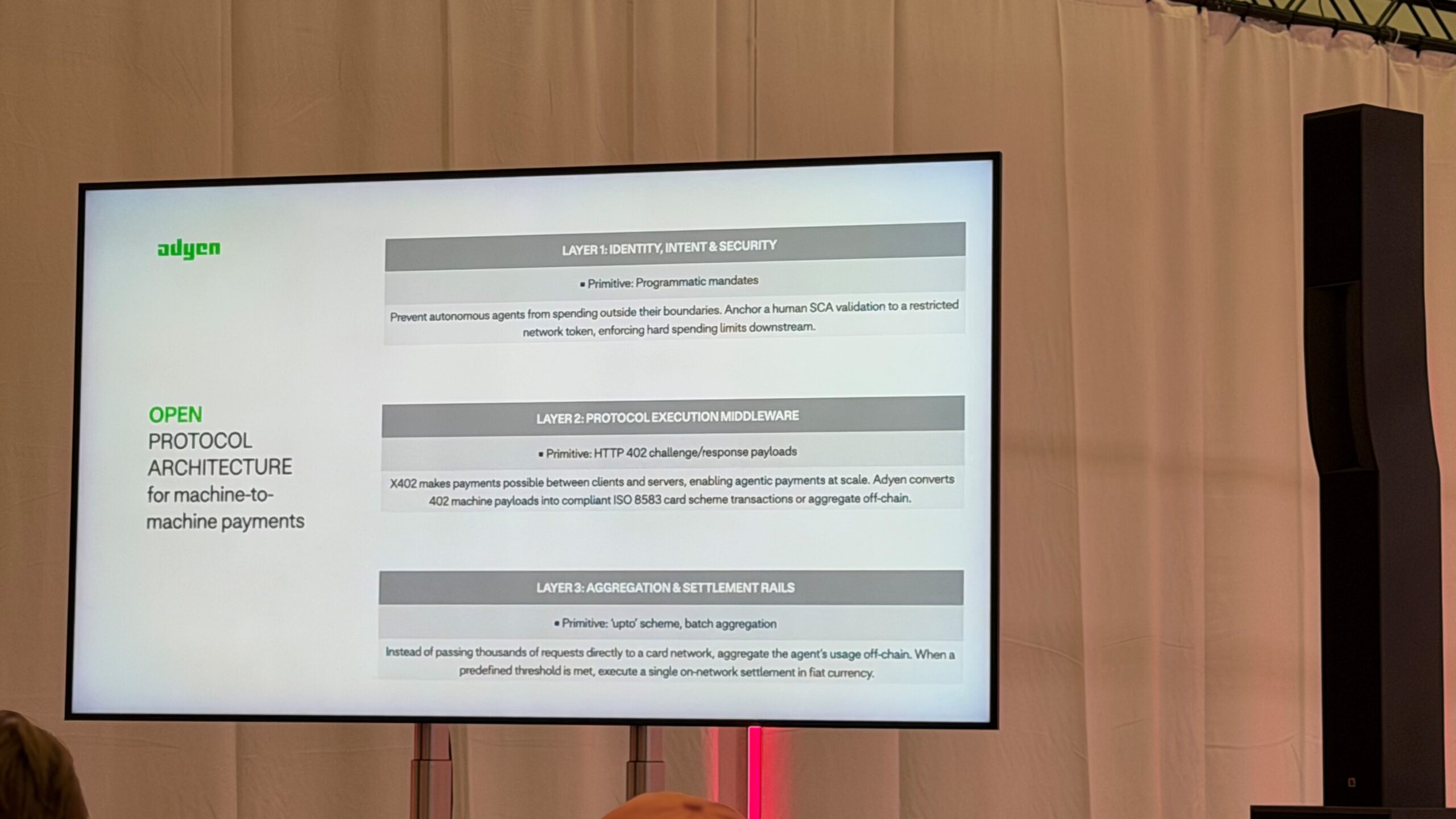
One particularly interesting presentation came from Adyen, whose approach emphasised embedding governance controls into infrastructure from the outset rather than adding them afterwards. This is exactly the right way to think about agentic systems.
Later, I joined a debate organised by PPRO on whether AI would take over consumer banking interactions. I was joined on stage by Oceane Codjia, Simon Taylor and Shivani McCormack.
My view remains that it will happen faster than many incumbents expect.
The real issue is not technology.
The real issue is trust.
The winners will be those organisations that can define clear boundaries around what AI systems may do, on whose behalf they may act and how their actions can be audited.
Fraud, Identity and the eIDAS Opportunity
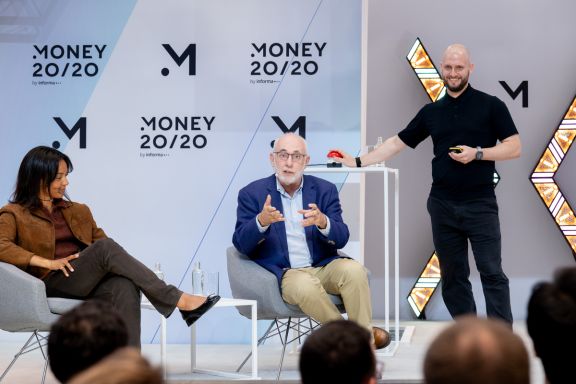
One of my favourite sessions was a panel on fraud that I had the pleasure of chairing alongside panellists Leda Glyptis, Breno Oliviera and Paul Weathersby.
Fraud is often discussed as though it were a specialist payments problem.
It isn’t. It is a societal problem.
In the UK it is already the most common crime. It remains dramatically under-prosecuted and is growing rapidly as artificial intelligence enables synthetic identities, automated impersonation and industrial-scale social engineering.
The uncomfortable truth is that many attacks now succeed because they look entirely legitimate.
Rules-based detection is reaching its limits.
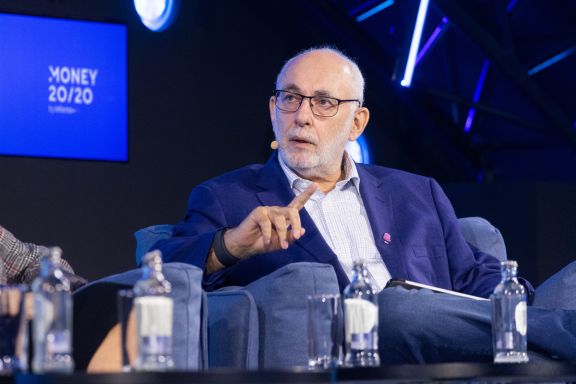
This is why I continue to believe that digital identity is becoming the critical layer in the next generation of digital infrastructure. It was the central argument of Identity is the New Money more than a decade ago, and I think the case has only become stronger.
The future lies in combining strong digital identity with behavioural intelligence: understanding not only who someone claims to be, but whether their behaviour is consistent with that claim.
I was fortunate enough to catch Google’s presentation backstage before the panel and it reinforced the point. The technology required to build continuous trust systems is arriving now.
The policy frameworks are beginning to arrive as well.
Particularly in Europe, the evolution of eIDAS and digital identity wallets may turn out to be one of the most significant developments of the decade.
The Bigger Picture
If I had to reduce three days of conversations into a single sentence, it would be this:
The infrastructure of commerce is being rebuilt around intelligence and identity.
Stablecoins are rewiring the plumbing.
Artificial intelligence is rewiring customer relationships.
Digital identity is becoming the trust layer that makes both possible.
This is not simply another technology cycle. It is a structural shift in how markets operate.
As I wrote in Before Babylon, Beyond Bitcoin, the future of money is not merely digital. It is increasingly contextual, programmable and connected to identity. The journey is from money that we understand to money that understands us.
Walking around Amsterdam this year, that future felt a little less theoretical.
The organisations acting now are helping to define the architecture.
The organisations waiting for certainty may discover that somebody else has already built the platform they must live on.